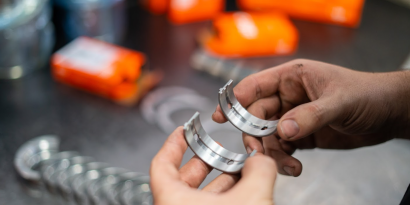

The longevity of engines depends on several factors. Among them, one of the most relevant—and often overlooked—is the condition of the engine bearings. These small but indispensable components ensure the smooth and efficient operation of moving parts by reducing friction between the crankshaft and the connecting rods. Understanding how signs of bearing wear appear helps prevent even more severe damage to engines, especially in light vehicles, trucks, agricultural machines, and other heavy equipment.
In this article, you will learn how to recognize the symptoms of compromised bearings, understand the risks of running the engine with worn components, and discover the best maintenance practices to protect your engine from bearing wear.
Why are bearings so important in the engine?
Bearings are metallic elements that function as bushings, creating a protective layer between moving surfaces inside the engine. Their role is to minimize direct contact between metal parts, preventing accelerated wear, overheating, and possible seizing. When bearings are not in good condition, excessive friction can cause serious, irreversible failures in the engine assembly, resulting in high maintenance costs—or even a complete engine replacement.
How to identify signs of bearing wear?
The most common symptoms of bearing wear appear gradually as the component loses its protective properties. Watch for these signs:
Unusual metallic noises: Persistent knocking or “ticking” sounds coming from the lower part of the engine can indicate increasing friction due to bearing gaps.
Drop in oil pressure: A warning light on the dashboard may turn on due to increased gaps and consequent loss of pressure in the lubrication system.
Excessive vibrations: Imbalance caused by bearing failure can generate noticeable vibrations in the steering wheel or in the engine itself, especially at certain RPMs.
Abnormal overheating: Increased internal friction can cause the engine temperature to spike irregularly.
Metal particles in the oil: When changing the oil, the presence of shiny debris may indicate bearing wear.
Ignoring these signs can cause damage not only to the bearings but also to more expensive and essential engine components.
What causes premature bearing wear?
Certain behaviors and situations can accelerate bearing wear:
- Lack of or late oil changes: Old or insufficient oil fails to properly lubricate the bearings, increasing friction and heat.
- Contaminated lubricant: Dirt, metal particles, or water in the oil compromise lubrication and act as abrasives.
- Improper assembly: Errors during engine assembly, such as incorrect torque or misaligned parts, can cause pressure and uneven wear.
- Overloading or excessive RPMs: Severe operating conditions put stress on the engine, reducing the lifespan of the bearings.
What are the consequences of delaying maintenance?
When bearings are excessively worn, the risks are high. The main consequences include:
- Engine seizure: Complete fusion of the bearings with the crankshaft can cause the engine to seize entirely.
- Damage to the crankshaft and connecting rods: Excessive wear may require costly crankshaft replacement or machining.
- Increased oil and fuel consumption: The engine needs to work harder, using resources less efficiently.
- Unexpected breakdowns and performance loss: Vehicle operation can be compromised at any moment, hurting productivity and safety.
How to prevent bearing wear?
The key lies in preventive actions:
- Perform regular oil and filter changes;
- Always use high-quality lubricants that meet the manufacturer’s recommendations;
- Schedule routine inspections of the lubrication system and monitor for abnormal noises;
- Conduct maintenance and repairs with high-quality, reliable automotive parts.
When replacing bearings or other internal components, choose a portfolio with a solid reputation in the automotive market, like RIO: a national and international reference in precision automotive parts. From light vehicles to trucks, they offer connecting rod bearings, thrust washers, and main bearings. Count on a portfolio of over 350 bearing applications, manufactured under strict quality standards to ensure maximum efficiency and a long service life for your engine.